


For the second time in a month, a scientific publication finding that human biology is fundamentally mismatched with the conditions of modern & industrialized life and leads to significant health consequences has been shoved into my space by an algorithm that believes I might have some interest.
SciTech Daily, and Phys.org have pushed the thoughts of evolutionary anthropologists Colin Shaw and Daniel Longman that humans have not evolved for these environments. That current urban settings impose continuous and chronic pressures to our health. This constant stimulation of the nervous system, which lacks the opportunity for recovery, not present in our ancestral environments, is linked to chronic health outcomes. They cite evidence of rising rates of inflammatory diseases and steep declines in global fertility as proof that contemporary life is undermining human evolutionary fitness and that biological adaptation is too slow to remedy the situation. We must stop, and societies must implement large-scale cultural and environmental redesigns to promote nature and human well-being. Wellness is paramount.
I understand the romantic idea that humans are ‘built for nature’ . But the reality is that every major improvement in human well-being has come from doing things nature never intended. If we had to confine ourselves to what was ‘natural,’ most would not have survived childhood,1 let alone lived into our 60s, 70s or 80s. 2
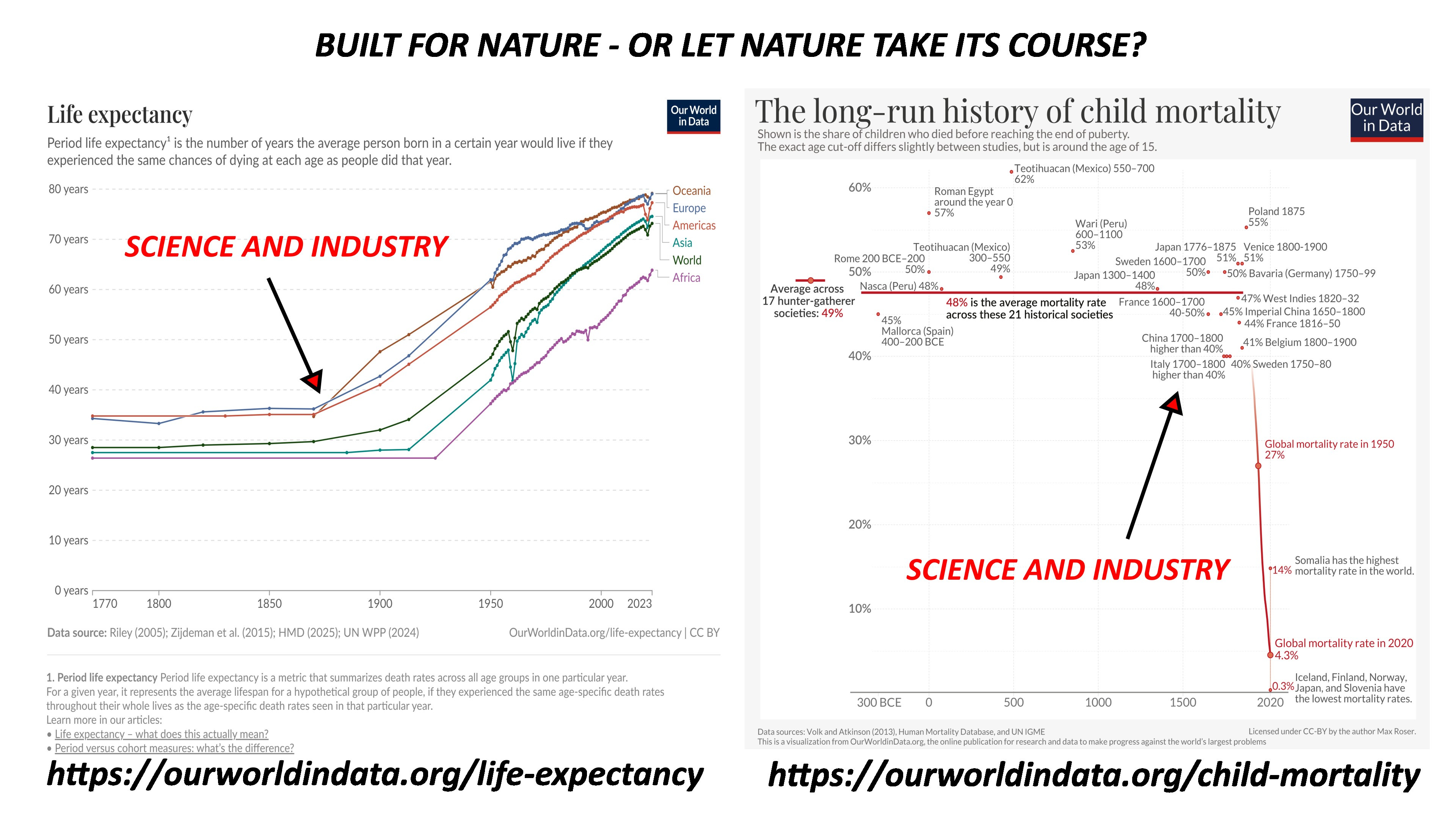
Nature gave us curiosity and a big brain, not cities, infrastructure, and vaccines. Human innovations build and solve problems. The argument that we should live as nature designed is yet another version of the appeal to nature fallacy. A belief system that starts with something being good simply because it’s natural. Bad because it’s modern or engineered. If we followed that logic, we’d reject eyeglasses, insulin, anesthesia, pasteurization, and every method we use to prevent children from harm and dying of infectious diseases. How is this perspective being lost? Turn back to the clock only a century, ‘If we were meant to fly, God would have given us wings.’3 Today, aviation is one of the safest modes of travel.
Have we moved past these fallacies? Sadly, perhaps not. Today, there are physicians and scientists with advanced degrees, numerous publications, and influence that proclaim natural chemicals are inherently safer, or that natural immunity is superior to those toxic man-made vaccines. Benefit and risks appear no longer important. In medicine and agriculture, genetic engineering is unnatural and unsafe4 despite reasonable policies5, and that petroleum-based, artificial, synthetic, chemicals are the true root causes chronic disease and infertility. Each of the before mentioned terms, deliberately used to generate an emotional reaction from your predetermined experiences and perceptions (e.g., petroleum-based, artificial, synthetic, chemicals)6 7
For some, and maybe not just a few, only nature can heal. Herbal remedies and traditional medicines are inherently superior, safer, and simple therapies. Traditional medicine and remedies that align with the appeal to nature. Yet, herb-induced liver toxicity (HILI) rivals drug induced toxicity (DILI)8, and alternative cancer cures that are pervasive of social media have been shown to result in early death.9 10 I’m sorry, but baking soda is not a cure for cancer, there are no pH miracles, alkaline water does nothing to blood pH, reverse the Warburg effect, cure or treat any disease! 11 Hemlock is natural. Aflatoxin is natural. Domoic acid is natural. Arsenic in groundwater is natural. Nature didn’t design any of these with human health in mind. Humans survived not because nature took care of us, but because we slowly figured out how to protect ourselves from the hazards it presents.
Publication
To be fair, I’ll list the publication and it’s conclusions:
Longman DP, Shaw CN. Homo sapiens, industrialisation and the environmental mismatch hypothesis. Biol Rev Camb Philos Soc. 2025 Nov 7. doi: 10.1111/brv.70094. Epub ahead of print. PMID: 41204658. https://doi.org/10.1111/brv.70094
For the vast majority of the evolutionary journey of Homo sapiens, a range of natural environments defined the parameters within which selection shaped human biology.
The rapid environmental changes of the Anthropocene, driven by industrialisation, have profoundly transformed the human habitat, imposing novel environmental pressures.
The rate of environmental change may be outpacing human adaptive capacity, potentially compromising our evolutionary fitness.
A growing body of empirical evidence suggests that environmental industrialisation negatively impacts human biology, suppressing key biological functions essential for survival, reproduction and, therefore, evolutionary fitness.
We consider whether industrialisation has created a mismatch between our primarily nature-adapted biology and the novel challenges imposed by contemporary industrialised environments, a possibility framed through the Environmental Mismatch Hypothesis.
This mismatch could have broad interdisciplinary relevance, from advancing understanding of adaptational processes in prehistoric and 21st century humans to addressing contemporary public health challenges and issues of global sustainability.
I won’t go into these individually given their mismatch with reality.
Toxicology Perspective
I will response with some toxicology perspectives. Toxicological sciences are not a simple pursuit, nor is it meant for those seeking easy answers. Mastering the disciplines of mathematics, physics, chemistry, medicine, foundational to toxicology demands hard work, patience, humility, and a willingness to accept that reality is far more intricate than intuition suggests. It’s easy and far more comforting to proclaim virtues in what feels “natural” and to denounce what seems “unnatural” than to confront evidence, probability, and uncertainties. I get the communication aspects of ‘make it simple stupid’ and ‘dumb it down’ in trying to help others that may not have the education and experience, but please start with knowing that simplicity is synonymous with goodness. Nature yields both medicine and poison, nourishment and famine, healing and disease. Most importantly, recognize that toxicology is a complex multidisciplinary science and we have a long way to go to fully appreciate both biology and chemistry underlying many toxicants both natural and man-made. Doing this from an unbiased perspective of chemical structure is most important. Doing this from historical aphormisms is less important.12
Here, I’m again reminded of Bruce Ames and how his work fundamentally unsettled the simple tidy moral dichotomy that many environmental activists were comfortable with. When Ames performed an analysis that compared the carcinogenic potential of natural chemicals to synthetic chemicals, it was deeply inconvenient for those who insisted that “natural” was inherently benign while “synthetic” was uniquely threatening.13,14
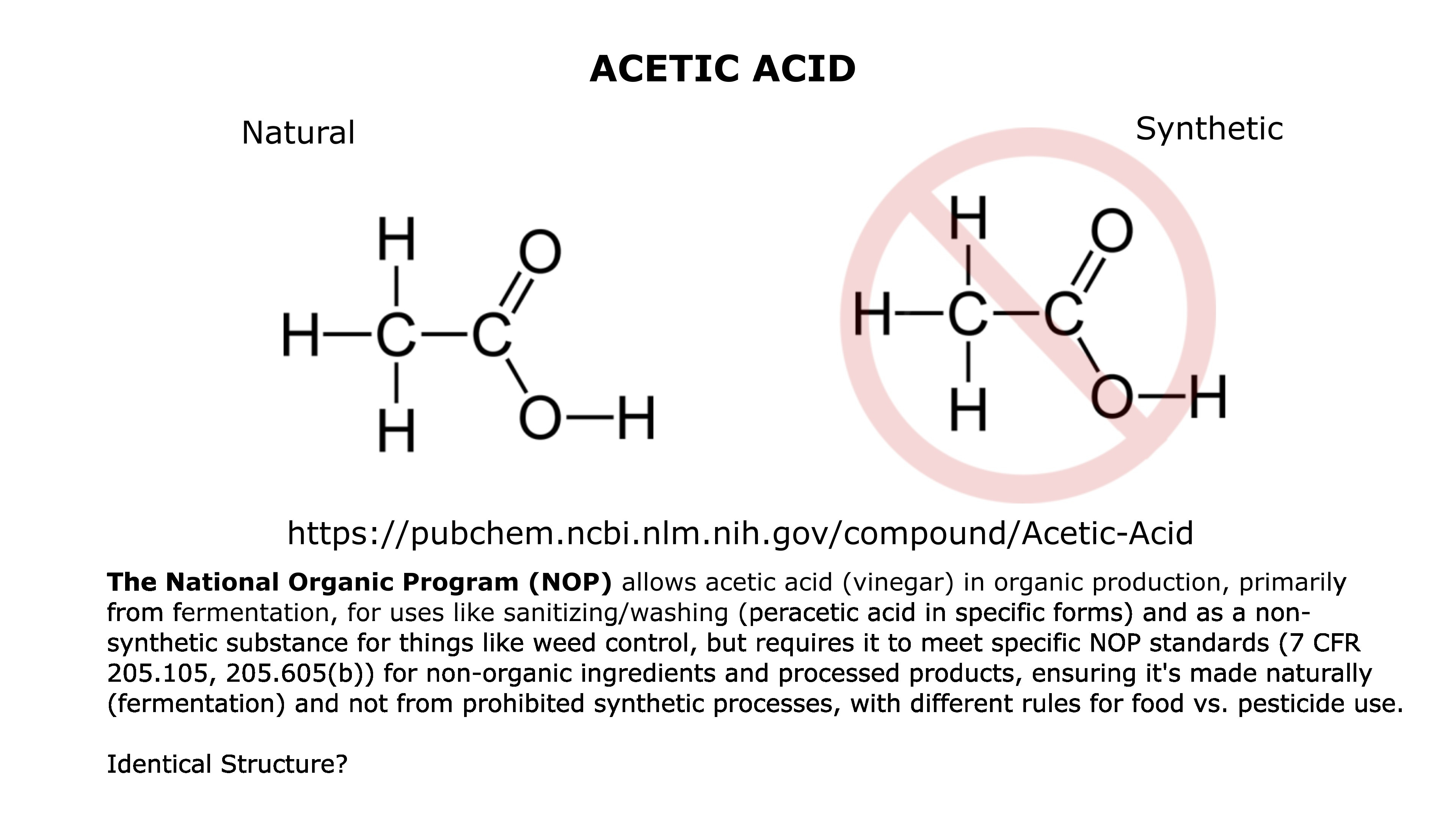
Today appears remarkably similar, and the word ‘natural’ itself continues to be used successfully in marketing.15 Let me add that National Organic Standards persists in treating identical molecules differently. For example, synthetic acetic acid (a 4-8% component of vinegar) is prohibited in some instances, yet any that occurs naturally through fermentation is acceptable.
I personally recall the reactions to Ames as fierce way back when I was a graduate student. When Ames argued that toxicological risk depends on dose and biological mechanism rather than chemical origin descriptors, he challenged not only the prevailing scientific assumptions but also a powerful moral narrative in environmental discourse. By demonstrating that plants synthesize numerous natural compounds capable of producing carcinogenic outcomes in rodent bioassays comparable to those of synthetic chemicals, he exposed the ideological boundaries that often constrain objective chemical risk assessment.
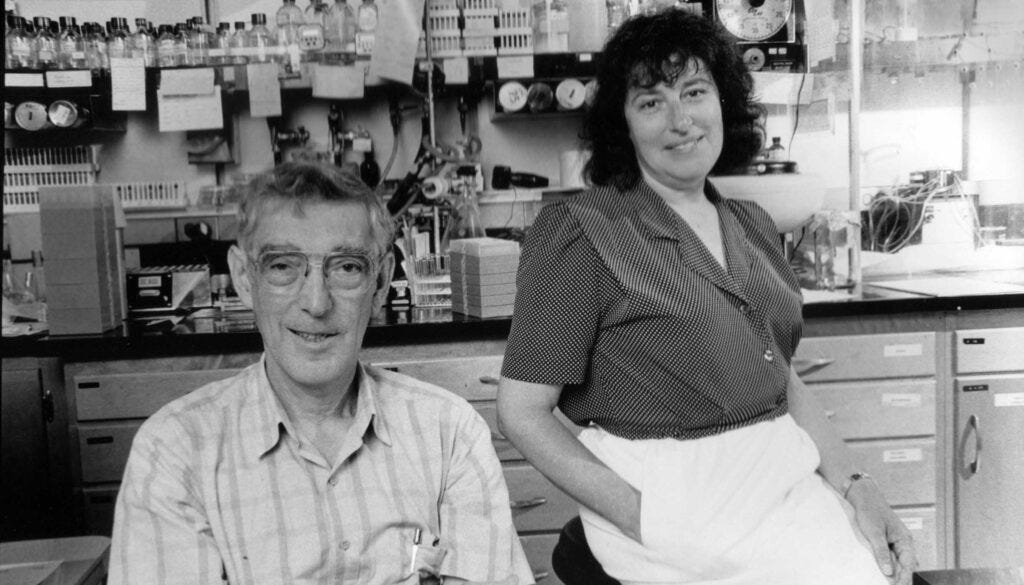
Ames’s work underscored a critical principle: science should not serve as a test of some moral allegiance to arbitary and capricious descriptors, but as a disciplined means for uncovering uncomfortable truths. Though we lost Bruce Ames last year,16 it is worth recalling that he accurately anticipated the National Toxicology Program’s bioassay results for indole-3-carbinol (I3C) nearly three decades before they were published.17 I’ll have a lot more on this in the future regarding clear carcinogeneity for a chemical that is widely regarded as an anti-carcinogen, but this aligns with Ames critique of our “house of cards” . His representation of the errant toxicological paradigms of his era remains strikingly relevant today. Our regulatory systems and institutional biases continue to reflect the unfounded belief that naturally occurring chemicals are inherently safer than synthetic ones.
Yet, Ames did not go far enough. His series of publications in the early 90s could have been extended to the myriad of additional natural carcinogens found in the environment. He also didn’t address those produced endogenously by human metabolism such as formaldehyde, ethylene oxide, and diverse classes of advanced glycation end products.18 Here I recall the 1982 work of Ryberg and Noble Laureate Tomas Lindhal,19 and how all of this might complicate epigenetics, DNA methylations of all types, and risk assessment. These endogenous agents remind us that the boundary between “natural” and “synthetic” is largely conceptual, not biological, and that our susceptibility to chemical injury arises from fundamental biochemical processes rather than simple distinctions of origin.
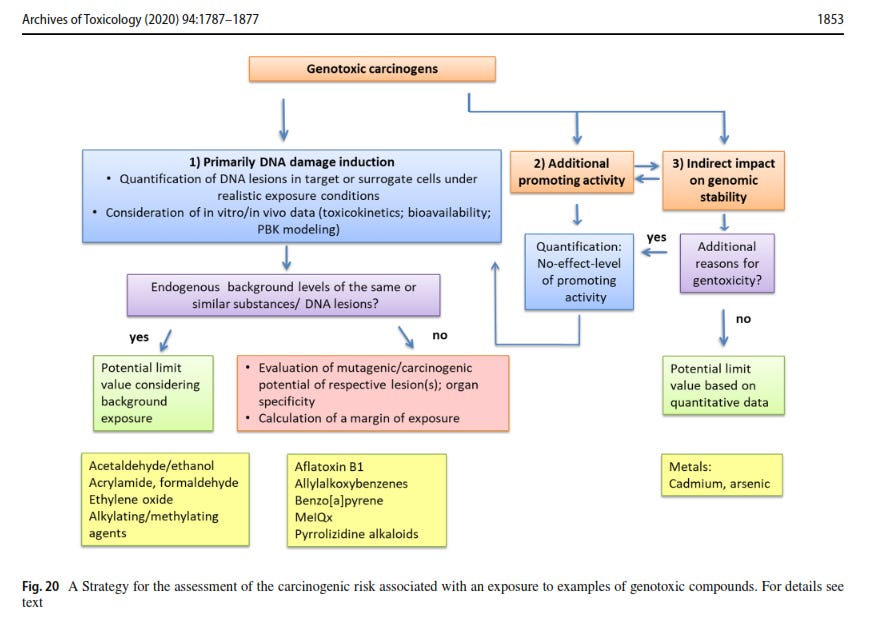
Ames never argued that synthetic compounds were without hazard; rather, he exposed the inconsistencies in how such hazards were framed. This was just one aspect of his legacy. His insistence that biological activity, not chemical source, determines toxicity remains as insightful now as it was then and a reminder that clarity about nature’s chemistry offers our best path forward reducing harm, improving health, and developing safer technologies.
Dualities & Suspicions
The duality of good and evil remain as a part of science because we are human, but science exists precisely because of the duality. We study natural phenomena not to romanticize them, but to understand and transform knowledge into healing rather than harm. Turning away from that pursuit is not a return to purity or morality; but more a retreat from truth into ignorance, fears and cognitive biases our evolution provides.
It is tempting, even fashionable, to default to suspicion. I’ve often reacted to those promoting conspiracies, especially the notion that “industry is poisoning us for profit.” That narrative is clean, dramatic, and emotionally satisfying for some.20 But it collapses under the weight of most realities. It formets distrust, and erases the enormous body of public science, the safety standards built over generations, and the regulatory scrutiny that exists precisely because society learned from its past mistakes. It ignores the thousands of researchers, clinicians, toxicologists, and public servants whose careers are devoted to preventing harm. And most of all, it overlooks the simple historical fact that we are healthier, taller, and longer-lived than any humans who have ever walked the earth. This is not because nature suddenly became kinder, but because we invested in sanitation, vaccines, antimicrobial therapies, agricultural science, and evidence-based medicine.
Suspicion toward modernity is easy because it aligns with a story people already want to believe. But modern medicine, chemistry, and public health did not emerge from greed; they emerged from necessity. People were dying from infections we can now cure, children were lost to diseases we now prevent, and countless lives were cut short by hazards we now understand and mitigate. Every major improvement in human health came not from submitting to nature but from stepping beyond it—questioning it, investigating it, and building tools to counter its indifference.
Built for Nature?
Hardly. Understanding natural falacies is more complex than some might imagine as perhaps itself is modern.21 But innovation has always been humanity’s way of softening nature’s harshest edges that include starvation, infection, childbirth mortality, toxicants of all kinds, and genetic disease. The goal has never been to abandon nature or to worship modernity, but to use science as a tool to make life safer, longer, and more humane. That is not hubris, and it is certainly not “unnatural.” It is one of the most enduring expressions of the human spirit that seeks to understand, improve, protect, and push the boundaries of what is possible.
Some people devote their lives to making the world better; others trade in fear, uncertainty, and doubt to magnify their own influence. Sometimes it’s hard to tell the difference, but as you reach or listen to the end of this reflection, remember something simpler and more fundamental: nature is beautiful, but it is not benevolent. It doesn’t teach or guide directly (I’ll retract that), soothe, or forgive. It doesn’t reward virtue or punish vice. It doesn’t care if you are pure, prepared, or poetic.
Nature is indifferent. It is magnificent, awe-inspiring, and worthy of reverence, I’ve taken pictures and reflected often just how beautiful nature can be as blessed by the ability to travel the world. But do not confuse beauty with kindness. Nature will kill you without hesitation, without malice, and without breaking stride. The only reason people can romanticize a “return to nature” is because they already lived under modernity’s protections that include food security, clean water, medicine, electricity, transportation, and the digital infrastructure through which they declare their love for the “natural” world. Yes, even here, now.
Consider for a moment, those who truly know how to live off the land, or just those that have simply watched survivalists televised with a discerning eye that understand this immediately: strip away the tools, the medicine, and the technology that generations have built, and you are left exposed to an environment that will starve, freeze, poison, or infect you without hesitation. Again, nature kills without malice and without mercy.
Please understand that science is not the enemy of nature; it is humanity’s answer to nature’s indifference. Through science, we carve out safety and possibilities in a world that was never designed with our survival in mind.
Stay safe out there.
Really unknown, but some interesting perspectives: https://www.vision.org/wright-mind-813
Abrams SA, Albin JL, Landrigan PJ; COMMITTEE ON NUTRITION; COUNCIL ON ENVIRONMENTAL HEALTH AND CLIMATE CHANGE. Use of Genetically Modified Organism (GMO)-Containing Food Products in Children. Pediatrics. 2024 Jan 1;153(1):e2023064774. doi: 10.1542/peds.2023-064774. PMID: 38073334. https://doi.org/10.1542/peds.2023-064774
1 comment on PubPeer (by: Metalasia Inversa)
Bearth A, Otten CD, Cohen AS. Consumers’ perceptions and acceptance of genome editing in agriculture: Insights from the United States of America and Switzerland. Food Res Int. 2024 Feb;178:113982. doi: 10.1016/j.foodres.2024.113982. Epub 2024 Jan 5. PMID: 38309884. https://doi.org/10.1016/j.foodres.2024.113982
Saleh R, Bearth A, Siegrist M. Addressing Chemophobia: Informational versus affect-based approaches. Food Chem Toxicol. 2020 Jun;140:111390. doi: 10.1016/j.fct.2020.111390. Epub 2020 Apr 26. PMID: 32348815. https://doi.org/10.1016/j.fct.2020.111390
Lin NH, Yang HW, Su YJ, Chang CW. Herb induced liver injury after using herbal medicine: A systemic review and case-control study. Medicine (Baltimore). 2019 Mar;98(13):e14992. doi: 10.1097/MD.0000000000014992. PMID: 30921214; PMCID: PMC6456154. https://doi.org/10.1097/MD.0000000000014992
Johnson SB, Park HS, Gross CP, Yu JB. Use of Alternative Medicine for Cancer and Its Impact on Survival. J Natl Cancer Inst. 2018 Jan 1;110(1). doi: 10.1093/jnci/djx145. PMID: 28922780. https://doi.org/10.1093/jnci/djx145
Johnson SB, Park HS, Gross CP, Yu JB. Complementary Medicine, Refusal of Conventional Cancer Therapy, and Survival Among Patients With Curable Cancers. JAMA Oncol. 2018 Oct 1;4(10):1375-1381. doi: 10.1001/jamaoncol.2018.2487. PMID: 30027204; PMCID: PMC6233773. https://doi.org/10.1001/jamaoncol.2018.2487
Ames BN, Profet M, Gold LS. Nature’s chemicals and synthetic chemicals: comparative toxicology. Proc Natl Acad Sci U S A. 1990 Oct;87(19):7782-6. doi: 10.1073/pnas.87.19.7782. PMID: 2217211; PMCID: PMC54832. https://doi.org/10.1073/pnas.87.19.7782
Ames BN. Natural carcinogens and dioxin. Sci Total Environ. 1991 May 1;104(1-2):159-66. doi: 10.1016/0048-9697(91)90012-4. PMID: 1871587. https://doi.org/10.1016/0048-9697(91)90012-4
https://www.asbmb.org/asbmb-today/people/102824/in-memoriam-bruce-ames | https://mcb.berkeley.edu/news-and-events/department-news/memoriam-bruce-ames | Cadet J, Wagner JR. Pioneering contribution of Professor Bruce Ames to early development in biochemical aspects of oxidatively generated damage to DNA. Front Mol Biosci. 2025 Aug 20;12:1636255. doi: 10.3389/fmolb.2025.1636255. PMID: 40909128; PMCID: PMC12405702. https://doi.org/10.3389/fmolb.2025.1636255
NTP Technical Report on the Toxicology Studies of Indole-3-carbinol (CASRN 700-06-1) in F344/N Rats and B6C3F1/N Mice and Toxicology and Carcinogenesis Studies of Indole-3-carbinol in Harlan Sprague Dawley Rats and B6C3F1/N Mice Gavage Studies): Technical Report 584 https://www.ncbi.nlm.nih.gov/books/NBK561029/
Hartwig A, Arand M, Epe B, Guth S, Jahnke G, Lampen A, Martus HJ, Monien B, Rietjens IMCM, Schmitz-Spanke S, Schriever-Schwemmer G, Steinberg P, Eisenbrand G. Mode of action-based risk assessment of genotoxic carcinogens. Arch Toxicol. 2020 Jun;94(6):1787-1877. doi: 10.1007/s00204-020-02733-2. Epub 2020 Jun 15. Erratum in: Arch Toxicol. 2020 Sep;94(9):3347. doi: 10.1007/s00204-020-02862-8. PMID: 32542409; PMCID: PMC7303094. https://doi.org/10.1007/s00204-020-02733-2
Rydberg B, Lindahl T. Nonenzymatic methylation of DNA by the intracellular methyl group donor S-adenosyl-L-methionine is a potentially mutagenic reaction. EMBO J. 1982;1(2):211-6. doi: 10.1002/j.1460-2075.1982.tb01149.x. PMID: 7188181; PMCID: PMC553022. https://doi.org/10.1002/j.1460-2075.1982.tb01149.x
Personality Disorders is also a possibility https://www.nimh.nih.gov/health/statistics/personality-disorders


