
Outrage by Design
Online Disinhibition Effect

Spend a few minutes online and it’s hard to miss that outrage rules the feed. This isn’t random, but a collision of psychology, technology, and culture.
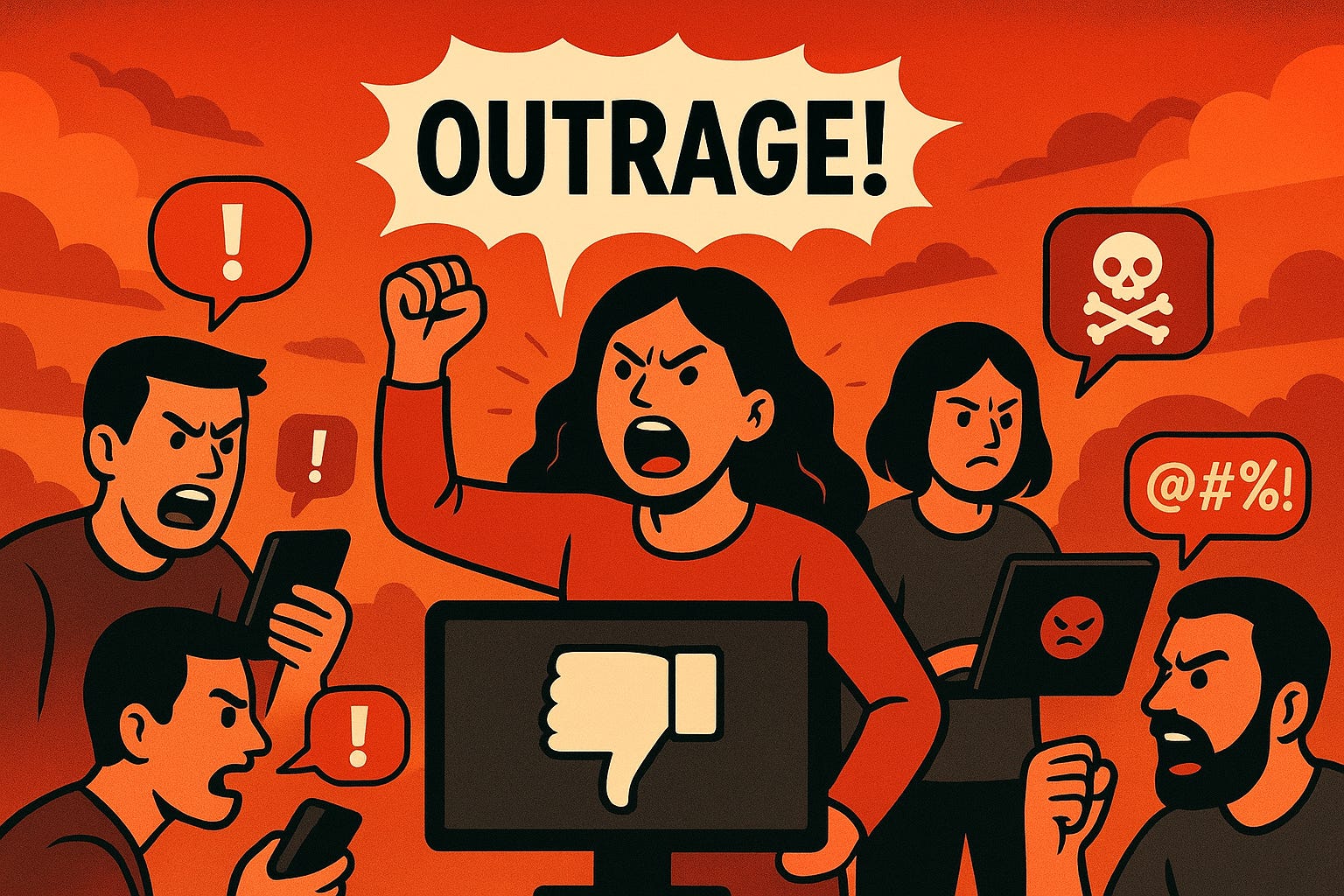
Doing my own research, psychologists call it the Online Disinhibition Effect: when anonymity and distance lower accountability, people say things they’d never say face-to-face. Again, anyonmus accounts are everywhere.
It’s easier to dehumanize when you don’t see someone’s eyes, body language, or hear their tone. Platforms amplify this because anger and fear drive engagement more than calm or kindness. Echo chambers reinforce it, splitting the world into US versus THEM. Extremism does feel good! (1987) - John Cleese vs Extremism (YouTube)
Yet outrage is a double-edged sword. It can unite people against injustice, but it can also polarize, distort, and harm. Science shows we are wired for both conflict and cooperation. Which side we amplify shapes the culture we create.
So here’s the question: Would I say this in person? Is my outrage helping? What are measureable steps and solutions to today’s problems.
We can choose to channel frustration toward solutions, toward restoring empathy and connection. We can educate, and where outrage spreads quickly, we can react with refection, contemplation, patience, grace, and acts of kindness. A healthier internet won’t erase disagreement, but it can make disagreement less destructive, more human, and maybe, little by little, a force for making the world better.
Reflection
Why reflect again this morning? As my little getaway winds down, I took a long walk along the beach, stopping to pick up bits of plastic scattered along the shore. At first, I felt a surge of outrage wondering how could there be so much careless waste? But then I spotted someone else also gathering trash, and the anger softened into something better and a reminder that I’m not alone.
Yes, there will always be those who toss things aside without thought. But there will also be people quietly choosing to make things better. That’s where hope lives. As a camper, I’ve always kept to one simple rule: leave a campsite cleaner than you found it. Maybe that’s not just advice for the outdoors. Maybe it’s a way to move through life—small, steady acts, multiplied across many hands, shaping something far greater than ourselves.
This brought to mind the poem Success, so often misattributed to Emerson but written by Bessie Anderson Stanley in 1904 that also has a personal aspect to a relationship long ago; a reminder that real success isn’t measured by wealth or recognition, but by the quiet ways we leave the world better than we found it.
—-
Success
He has achieved success who has lived well, laughed often, and loved much; who has enjoyed the trust of pure women, the respect of intelligent men and the love of little children; who has filled his niche and accomplished his task; who has left the world better than he found it, whether by an improved poppy, a perfect poem, or a rescued soul; who has never lacked appreciation of earth’s beauty or failed to express it; who has always looked for the best in others and given the best he had; whose life was an inspiration; whose memory a benediction.
Bessie Anderson Stanley in 1904
Maybe success really is just this: leaving things a little better than we found them. 🌿