
NutriNet-Santé
Ongoing Failures of Nutritional Epidemiology - Failures in Science Reporting and Communication

High blood pressure, heart attacks linked to common preservatives in food!!!
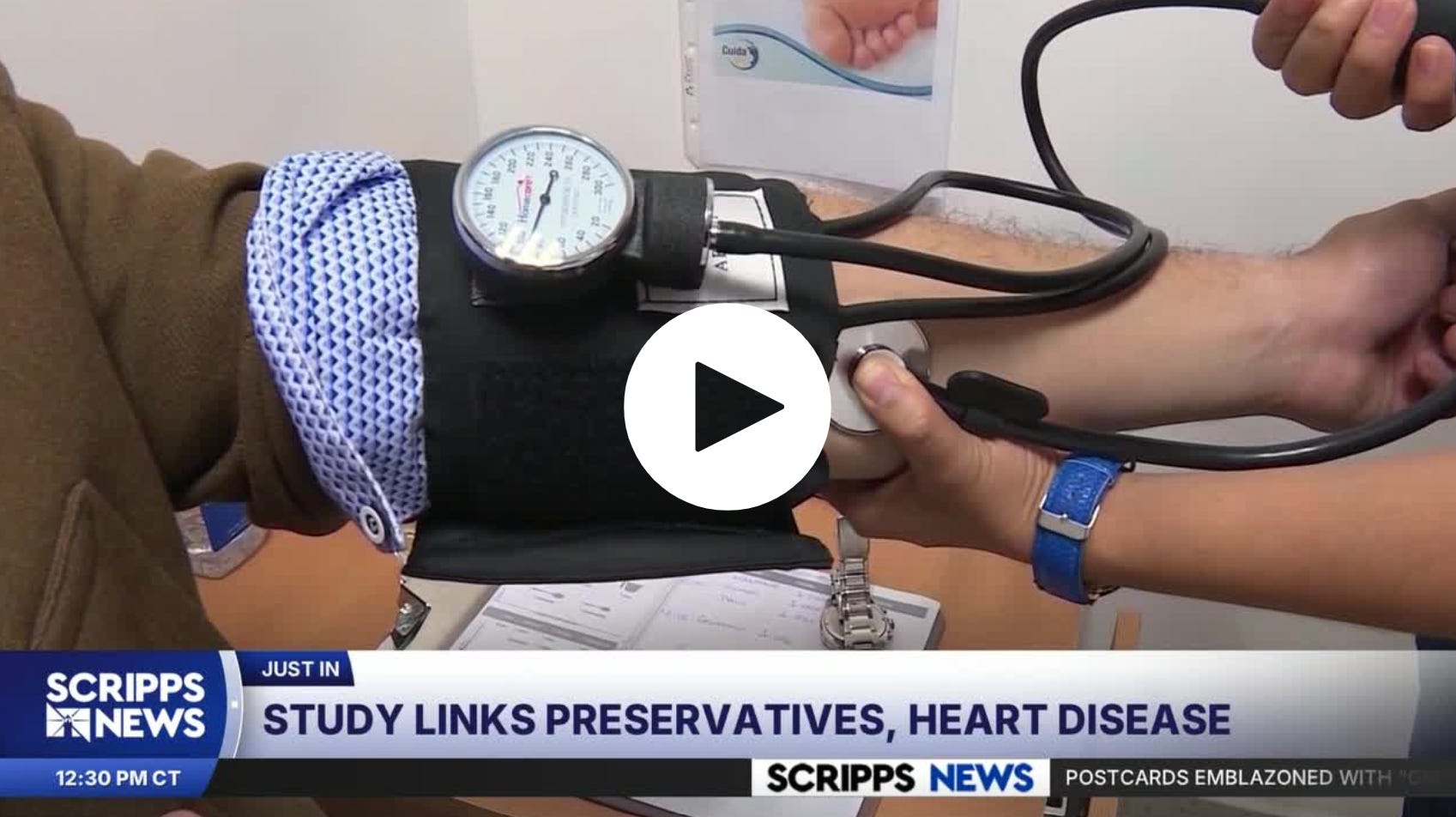
This piece hit me this morning, and although I haven’t written in a while, I feel compelled to respond to this Scripps News amplifying a NutriNet-Santé preservative study ( https://www.scrippsnews.com/health/high-blood-pressure-heart-attacks-linked-to-common-preservatives-in-food )
I am not a nutritional epidemiologist. I am a toxicologist by training. And at some point, this type of storytelling has to stop. Nutritional epidemiology continues to produce alarming headlines from study designs structurally incapable of establishing causation, and this NutriNet-Santé preservative paper (like others in this series) is yet another example of a field that has lost the plot and refuses to correct itself. I cannot be more angry or more direct.
What This Study Actually Does
Self-selected, health-conscious French volunteers reported a handful of dietary days twice a year (three days of intake, every six months) and researchers inferred “exposure” to individual preservatives by cross-referencing to commercial ingredient databases. There are no measured concentrations. No bioavailability data. No toxicokinetic modeling. No internal dose metrics. No comparison against any toxicologically relevant threshold. Just inference stacked on inference, laundered through statistical modeling and presented as evidence of risk. This is not exposure science. It is not even a rough approximation of exposure science. It is guesswork with regression equations on top.
To put this in toxicological terms: we do not know what anyone actually consumed. We know what products they reported eating on a handful of days and what those products list as ingredients.
The Confounding Is Overwhelming and Cannot Be Statistically Wished Away
To start, sodium nitrite does not appear in the food supply as an isolated chemical exposure. It co-occurs with processed meats, excess sodium, saturated fat, alcohol, and the full constellation of dietary and lifestyle patterns that have been independently and repeatedly linked to cardiovascular disease for decades. Statistical adjustment for “diet in general” does not surgically extract a preservative signal from that matrix. Treating these adjusted models as if they isolate causal effects is not sophistication but categorical errors dressed up as methodology. The association being reported almost certainly reflects “eats a great deal of processed meat and drinks wine regularly.”
These problems are not new and not subtle. Ioannidis and Schoenfeld demonstrated (American Journal of Clinical Nutrition, 97:127) that the majority of common food ingredients (40 out of 50 examined) had been studied for cancer associations, with the majority showing statistically significant results in at least one study. The signal wasn’t biology. It was the near-certainty of finding associations when you run enough tests on self-reported dietary data in populations where everyone eats everything.
The Ascorbic Acid Claim Absolutely Destroys this Study’s Credibility
The most damaging finding in this paper, damaging to its own authors handed the microphone, is the flagging of ascorbic acid, citric acid, acetic acid, and sorbic acid as potential cardiovascular hazards.
These are not mysterious or poorly characterized chemicals. They are among the most extensively studied molecules in biochemistry and toxicology, with established safety profiles across every major regulatory jurisdiction on earth. Controlled intervention studies have demonstrated antihypertensive effects of supplemental ascorbic acid (Juraschek et al., American Journal of Clinical Nutrition, 2012), meaning the directional signal in this paper is not merely implausible, but contradicted by existing mechanistic evidence from a more rigorous study design. (sure, you can find other studies, but the weight of evidence is to the contrary).
The senior author’s rationalization that added ascorbic acid is “not exactly natural” because it “may be chemically manufactured” is not a scientific distinction. It is the naturalistic fallacy with academic credentials attached. L-ascorbic acid is L-ascorbic acid. The molecule is structurally and stereochemically identical whether extracted from a citrus fruit or synthesized via the Reichstein process. The intestinal epithelium absorbs it through the same sodium-dependent vitamin C transporters SVCT1 and SVCT2 regardless of manufacturing. There is no receptor, no enzyme, no physiological pathway that reads a certificate of origin. When a senior researcher offers this as a scientific explanation in the popular press, the field should be embarrassed. What’s next? A petroleum-based analysis and questions?
Citric acid is a core intermediate in the Krebs cycle (I also like citrus). Acetic acid is vinegar (I like pickles). Sorbic acid, originally isolated from Sorbus aucuparia berries, has a half-century international safety record. When these compounds are “associating” with disease risk in your dataset, the problem is not some hidden toxicology, or industrial conspiracy. The problem is the methods and researchers.
The Multiple Comparisons Problem Is Not a Minor Technical Quibble
This study examined 58 preservatives and conducted focused analysis on 17, finding 8 associations with hypertension. At a conventional p < 0.05 threshold across 17 independent tests, approximately one false positive is expected by chance alone. Is there a statistician in the house taking notes that on corrections for multiple comparisons. Across all 58 compounds tested, the expected false discovery count under the null hypothesis approaches three. The coverage mentions no Bonferroni correction, no false discovery rate adjustment, no Benjamini-Hochberg procedure (OK, I’ll stop). In a domain already built on self-reported data, weak effect sizes, and ubiquitous exposures, uncorrected multiple comparisons do not produce discoveries. They produce statistical inevitabilities that get reported as findings.
The Absolute Numbers Are Nowhere
The headline reports a “29% greater risk of elevated blood pressure” and “16% higher risk of heart attacks and stroke.” These are relative risks (I assume, as it’s hard to tell?). The article additionally provides no absolute baseline rates, which means the reader has no basis whatsoever for understanding the clinical magnitude of what is being claimed. A 29% relative risk increase on a low baseline event rate is a very different thing from the same relative increase on a high baseline. Reporting relative risks without absolute context is not neutral science communication but alarm and amplification.
What Is Actually Being Claimed Here
Follow the logic of this paper to its conclusion. Pickling. Fermentation. Home canning. Vitamin C in your orange juice. Vinegar on your balsamic salad dressing. The organic acid intermediates of your own metabolism. These, according to these findings taken at face value, represent cardiovascular and carcinogenic hazards.
Finally, consider the preservation chemistry and that these compounds are added and exist for a reason: to prevent microbial growth, spoilage, and real toxicological hazards posed by bacterial pathogens and mycotoxins in the food supply. Some alternatives to antimicrobial and antioxidant preservation is Clostridium botulinum, aflatoxin, Listeria, and a host of other bacteria ‘linked’ to foodborne illness burden that killed people routinely (organically and currently) before modern food science intervened. We are now being asked to treat solutions as the problem. It’s these additives and processing!
What Is Actually Unacceptable
It’s not just the limitations of this particular study; it is the continued normalization of this level of evidence as being scientifically informative. It is not informative. It is misleading. And when institutions, journals, universities, news organizations amplify it without scrutiny, they are not communicating science. They are broadcasting noise with an institutional letterhead.
This field, if it wants to be taken seriously, needs to return to first principles: actual exposure assessment, measured doses, dose-response relationships, biological plausibility, mechanistic support, and independent reproducibility. That is what toxicology demands. That is what public health deserves. Scientific criteria exist for a reason and “we found a statistically significant association in a self-reported dietary cohort” satisfies approximately none of them for these compounds.
Until nutritional epidemiology holds itself to a higher standard, these studies should not be treated as evidence of risk. They should be treated as examples of how to produce publishable noise. The extension of these same methods to cancer and diabetes risk here and as done in companion papers does not strengthen any case. It multiplies the problem.
This is how science earns public distrust. Not through malice, but through the systematic publication of weak inference presented as discovery, amplified by press releases, and consumed by a public that reasonably assumes the institutions involved have done their job.
They have not done their job. I’ve done mine but go ahead and read the reporting and study for yourself. And above all…
Stay safe out there.
When I came across this, I found it pseudoscience jabberwocky.
While there are concerns with nitrites/preservatives and likely high salt, this study did not address this. The Ascorbic Acid made me do a face palm. This is just me doing a quick read, thanks for the in dept analysis.